ADA Compliant Portable Bathroom Rental: Why Accessible Routes Matter
When individuals think of an ADA certified mobile toilet leasing, they typically envision the system itself. They ask whether the delay is bigger, whether it has grab bars, whether it is classified correctly, whether it counts as an ada available mobile washroom. Those are very important concerns, but they are just component of the job.
The path to the device matters equally as much.
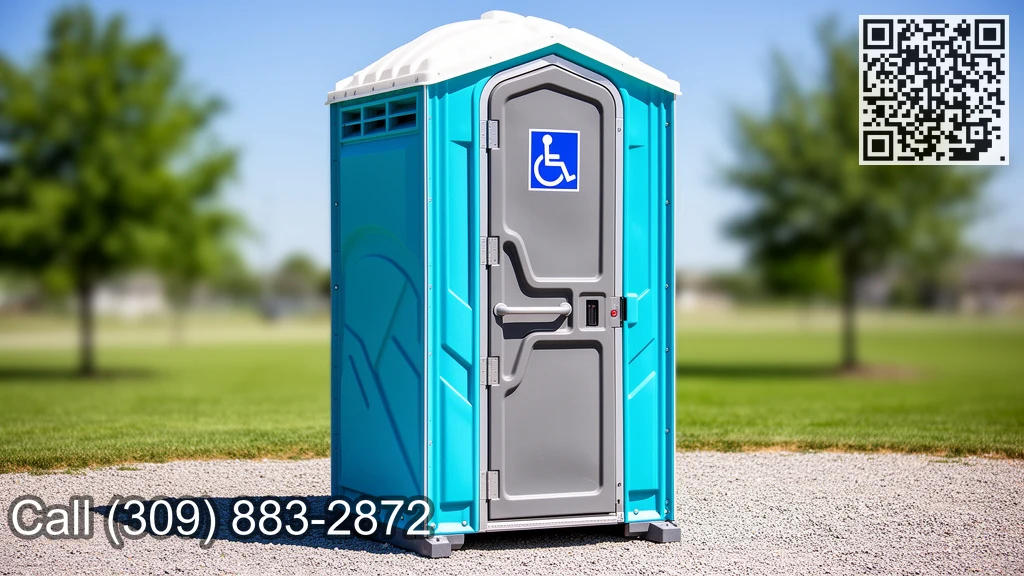
I have actually seen this missed in ways that are understandable and hard to excuse. A rental business supplies an ada certified mobile bathroom. The event group really feels happy since they examined package and ordered the best design. Then the device obtains positioned at the much side of an area, behind a row of common toilets, over soft ground, or at the end of a course with a lip or slope that makes independent access challenging or difficult. Theoretically, there is an obtainable device on website. In method, a visitor still can not utilize it with dignity.
That void between presence and use is where most real-world access issues live.
A certified unit is inadequate if the route fails
The managing government standard for this issue in the USA is the 2010 ADA Requirements for Accessible Layout, as applied via the Department of Justice and interpreted by the Accessibility Board. For portable systems at short-term occasions and comparable setups, availability is not limited to the inside of the bathroom. The obtainable mobile commode needs to also be attached by an available path and entryway. If a ramp or landing is needed, it has to satisfy the ADA's technical requirements.
That may seem noticeable, however in the area it obtains missed out on constantly because route preparation often occurs late. A person picks the bathroom financial institution location based on solution truck gain access to, event circulation, secure fencing, or readily available open space. Just afterwards do they think about the ada portable toilet. Already, the most convenient area may currently be the most awful spot for accessibility.
An ada compliant portable restroom is intended to work as component of a full customer experience. A person must have the ability to approach it, enter it, use it, and leave it without running into obstacles that the criterion is indicated to remove. If the course is broken, the bathroom is functionally broken too.
What the ADA in fact anticipates in this setting
For clusters of mobile single-user toilet units, at the very least 5 percent of the devices in each collection have to be accessible. The Access Board has actually explained that this uses also at momentary occasions. That factor issues due to the fact that some coordinators still assume momentary methods versatile. Short-term does not imply exempt here.
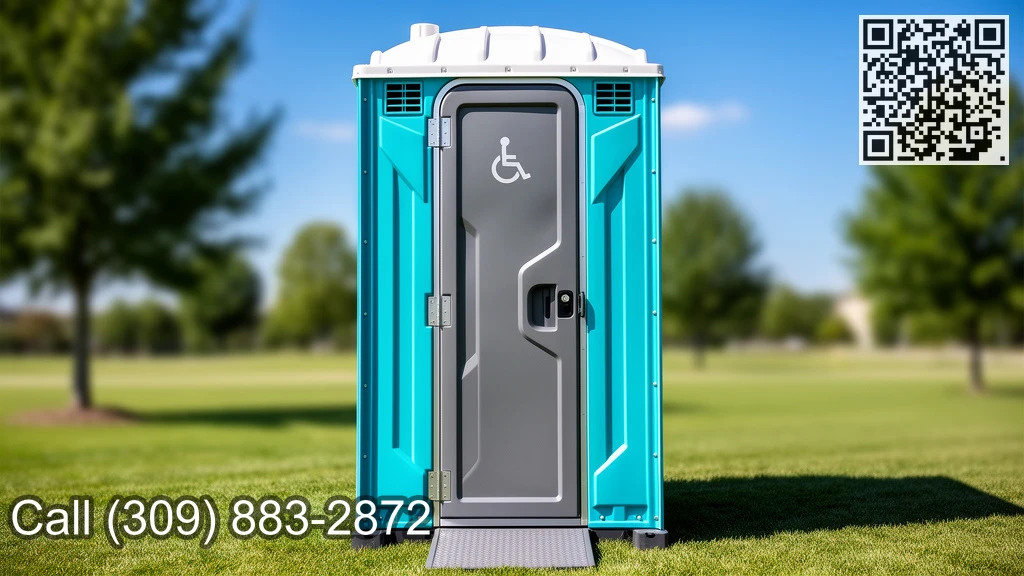
The accessible device should be identified with the International Symbol of Availability. Inside and at the entryway, the commode area still needs to satisfy suitable technical requirements. Those include transforming space, component clearances, door maneuvering clearances, and the relevant grab-bar and water-closet clearance policies. Simply put, an ada-compliant mobile bathroom is not just a bigger covering. It is a system developed around real use by individuals with disabilities.
And still, even that is not the full story. The route to the system and the entryway right into it belong to the need. That is what transforms a compliant piece of equipment right into a compliant installation.
There is one nuance worth noting because it causes complication. The ADA requirements have actually historically treated some mobile bathroom devices at building sites in a different way when those devices are utilized exclusively by construction employees. That slim distinction needs to not be stretched past its truths. For basic portable toilet leasings, including public events and similar temporary settings, the accessible-unit requirement continues to be firmly in place.
Why available courses are where great intentions fail
Most ease of access errors with portable toilets do not come from open neglect. They originate from fragmented planning. One team takes care of website design. Another takes care of rentals. One more manages procedures. Nobody has the route from the drop-off indicate the door.
That course can fail in subtle means. A placement might look close on a map yet be divided by irregular ground. A course might practically exist but compel somebody to approach from the side or navigate around congested obstacles. An entry may be obtainable just by crossing a change that functions fine for foot traffic however except a mobility device individual. A ramp might be included with great intentions yet without the touchdowns or technological compliance the ADA requires.
These are not little details. They are the difference between access and exclusion.
There is also a human side that typically gets lost in compliance talk. If a guest, attendee, worker, or relative has to ask for aid simply to reach the washroom, the issue is currently bigger than logistics. Restroom accessibility is basic, private, and time-sensitive. People need to not need to work out for it, wait for a person to move barriers, or search for an employee who understands where the "unique unit" was placed.
The path is part of dignity
That may sound like soft language for a technical issue, but it is not. Self-respect is what the technical guidelines protect.
Think regarding the distinction between these two setups.
In the very first, an ada handicap obtainable portable bathroom is put beside the major bank of devices, on a course individuals are already making use of, with the entry reachable without added support. It is recognized effectively, simple to discover, and incorporated into the website like any kind of various other important service.
In the second, the ada mobile commode is offered just if somebody goes across a harsh short-term surface, goes around the back of a fenced area, and comes close to an entrance from an unpleasant angle. There may be a certified version on site, yet the person who requires it is still being separated from every person else.
The law addresses accessibility, however individuals experience inclusion.
Temporary events do not obtain a pass
One of one of the most relentless myths in mobile cleanliness is that short-term setups are in some way judged by a looser criterion. They are not, a minimum of not in the general sense many coordinators presume. The Gain access to Board's guidance explains that the 5 percent accessible-unit demand for clusters applies also at short-term events.
That has sensible repercussions. A weekend break celebration, a neighborhood charity event, a fair, a pop-up activation, a temporary venue expansion, or an exterior event still needs to consider accessible placement. Short duration does not remove the need for an accessible route. If anything, temporary websites require more attention since they are more probable to be put together quickly on imperfect ground with improvised flow patterns.
I have actually located that short-lived websites are additionally where accessibility obtains treated as a late-stage modification. Somebody realizes the day prior to opening up that they require an ada certified mobile bathroom rental, so the distributor sends out one, and every person assumes the trouble is solved. Then, nevertheless, the website layout might already be fixed. The accessible device winds up in whatever gap is left.
That is a planning failure, not a product failure.
What tenants and site supervisors ought to validate prior to placement
If you are preparing ada compliant portable washrooms, the vital question is not just "Did we rent out the ideal unit?" It is "Can a person actually get to it and use it under genuine problems?"
A brief pre-placement check usually catches the most significant mistakes:
- Confirm the number of systems remain in each cluster and whether at least 5 percent of that collection will certainly be accessible.
- Make sure the easily accessible system is plainly understood the International Sign of Accessibility.
- Walk the path to the entry, not simply the decrease zone, and look for obstacles that would certainly disrupt obtainable travel.
- If a ramp or touchdown is needed, treat it as an ADA compliance thing, not an improvisated add-on.
- Verify that the device's entrance and interior problems sustain the required maneuvering and clearances.
That list appears simple since it is simple. The difficulty is doing it early sufficient that positioning can still be changed.
Clusters matter more than many people realize
The need relates to each collection of portable single-user commode devices, not just to the complete number leased across a whole occasion or site. That information issues in the area since organizers often spread systems right into separate banks for convenience.
Imagine an occasion with numerous commode areas. If there is one big central cluster and a few smaller sized satellite collections, access can not be resolved by loading all obtainable systems into the primary area while leaving the smaller sized clusters without gain access to. The 5 percent guideline uses at the cluster level. Even without obtaining lost in mathematics, the takeaway is clear: each grouping requires its own accessibility review.
This is just one of those issues that tends to amaze individuals who assumed a sitewide total amount was enough. It usually is not.
The interior needs are not optional details
There is a tendency in rental discussions to make use of terms like ada mobile restroom and ada-compliant portable washrooms as if they just describe a bigger version. The ADA standards are a lot more particular than that.
The device must satisfy relevant toilet-room technical requirements. That consists of turning room, component clearances, door steering clearances, and suitable guidelines for grab bars and water-closet clearances. These are not aesthetic features. They influence whether the user can position, move, and operate the space.
That matters when a customer stores on tag alone. Not every big portable toilet is always an ada certified mobile commode. Not every device marketed delicately as easily accessible will satisfy the technological needs that regulate certified installments. The difference is simple to miss if the discussion is driven totally by stock names as opposed to actual conformity needs.
This is why experienced customers often tend to ask more challenging inquiries. They would like to know not simply what the system is called, however whether it is being supplied and mounted in a way that straightens with ADA requirements.
The course outside the door frequently determines whether the device operates at all
A portable unit can be totally compliant as manufactured and still stop working the customer as a result of where and exactly how it is positioned. That is the uncomfortable fact in lots of access disputes.
The course can break down prior to a person even gets to the entry. The entry can damage down if approach area is jeopardized. A ramp can break down if it exists in name only but does not satisfy technological requirements. As soon as that occurs, it does not matter just how great the interior transforming area is. The customer is quit in the past those attributes come to be relevant.
I have actually seen teams concentrate heavily on the spec sheet and almost not on strategy conditions. That is reasonable since product requirements are very easy to file. Course functionality needs judgment, website understanding, and sometimes a determination to test a convenient layout. However if you are trying to offer a truly usable ada compliant available mobile bathroom, that effort is nonnegotiable.
Accessibility is entering into a wider conformity culture
There is a bigger context right here also. ADA conformity is not shrinking right into a niche concern. It is becoming extra visible throughout sectors, consisting of electronic gain access to and public service distribution. Recent government assistance influencing web and mobile availability due dates for state and city government entities is one indication of that wider environment. The specifics of electronic compliance are different from portable sanitation, yet the practical lesson is similar: accessibility expectations are energetic, advancing, and progressively difficult to deal with as an afterthought.
For site operators, place managers, municipalities, colleges, and occasion producers, that must be a wake-up phone call. Ease of access is no more something you deal with only when somebody complains. It is part of responsible operations. When individuals search for an ada mobile bathroom service, they are typically trying to fix more than a purchase problem. They are attempting to meet a lawful commitment and a basic criterion of care.
Common judgment calls that should have more attention
Not every website is very easy. Some places are constrained, sloped, crowded, or momentary in a way that makes every positioning imperfect. That is precisely why judgment matters.
Here are a few scenarios where skilled planning makes a distinction:
- An unit placed near solution access might be less complicated to maintain, however if that route is less available for customers, benefit for pumping should not immediately win.
- A remote edge might really feel less aesthetically intrusive, yet relocating the ada accessible portable washroom away from the main flow can create seclusion and route problems.
- A final ramp might look like a repair, however if it does not follow ADA technological requirements, it can develop false self-confidence rather than access.
- Spreading devices equally around a site can aid crowd control, however each cluster still needs its own accessible thinking.
- Labeling a device as obtainable helps individuals discover it, yet signs can not make up for a hard to reach path.
What attracts attention in these cases is that ease of access rarely falls short due to the fact that nobody cared. It falls short due to the fact that one more top priority quietly overrode it. Service, looks, group circulation, security, or rate took the lead, and gain access to got squeezed into whatever area remained.
Language matters, however efficiency issues more
The market makes use of a lot of overlapping phrases: ada certified mobile toilets, ada-compliant portable restrooms, ada certified available mobile restrooms, ada portable bathroom, ada-compliant portable commode. A lot of customers are just looking for the right thing, and search language often tends to blur distinctions. That is normal.
But the best means to think of it is this: the phrase must explain a washroom arrangement that really works under ADA regulations, not just a design name in a brochure. A certified installation consists of the right variety of easily accessible units in each cluster, proper recognition, the required inside and entry problems, and an easily accessible course. Overlook any one of those pieces and the phrase starts to shed its meaning.
That is why available routes deserve so much interest. They are commonly the least noticeable component of the setup process and one of the most crucial component of the user experience.
Planning early is the simplest form of compliance
If there is one sensible lesson I would press on any kind of coordinator, it is to manage ease of access prior to the website strategy hardens. When secure fencing, vendor cubicles, stages, solution lanes, and group networks are dealt with, the restroom place ends up being much more difficult to deal with. Early preparing provides you alternatives. Late preparing offers you compromises.
This is especially true when several clusters are involved. It is a lot easier to develop each bathroom location with accessibility in mind than to retrofit one available unit right into a website that was outlined for rate alone. When teams do this well, it barely really feels dramatic. The obtainable toilet is present, clearly significant, and reachable. No one needs to improvisate. No one needs to apologize.
That is how it needs to feel.
The actual test is simple
A person coming close to an ada certified portable toilet must not have to question whether the course is indicated for them. They should not need to ask approval, wait on assistance, or attempt a path that others can bypass with ease. If the system is genuinely accessible, the route will certainly claim so prior to the sign does.
That is the heart of this issue. An ada certified portable commode rental is not just about ordering the correct system. It is about positioning that device where ease of access is real. The requirements acknowledge that reality. Good drivers do too. And for individuals who https://pristineportablesil.com/portable-generator-rental/ rely upon those toilets, the distinction is prompt, functional, and deeply personal.
 Ask ChatGPT
 Ask Grok
 Ask Perplexity
 Ask Claude
 Ask Google AI
 Ask You